
Agentic coding in 2026 isn't a single chat window — it's a fleet of autonomous agents reading files, spawning sub-tasks, writing tests, and committing code while you drink coffee. The shift from "prompt one model" to "orchestrate many" is real, and so are its hidden costs: rate limits that multiply with every agent you add, runaway token spend that doesn't show up until the invoice, and sessions that evaporate mid-task without warning.
TL;DR: Agentic coding means multi-step tool loops with goals — not one-shot chat. In 2026 the bottleneck is fleet coordination and rate limits, not “can the model edit a file.”
What does agentic coding actually mean in 2026?
Agentic coding is the practice of giving an AI assistant persistent goals, tool access, and the authority to act across multiple steps without a human in the loop for each step. The agent reads your codebase, plans a sequence of changes, executes them via tool calls (file reads, edits, shell commands, web searches), evaluates results, and loops until the goal is met or it asks for help.
The shift from single-turn prompting to agentic loops has happened faster than most developers expected. Claude Code, GitHub Copilot's agent mode, Cursor's background agents, Cline and Roo in autonomous mode, and OpenAI Codex — all of them now support multi-step execution with tool use and sub-agent spawning. A developer running a modest Claude Code session today might trigger dozens of tool calls and hundreds of API requests without touching the keyboard between the first prompt and the last commit.
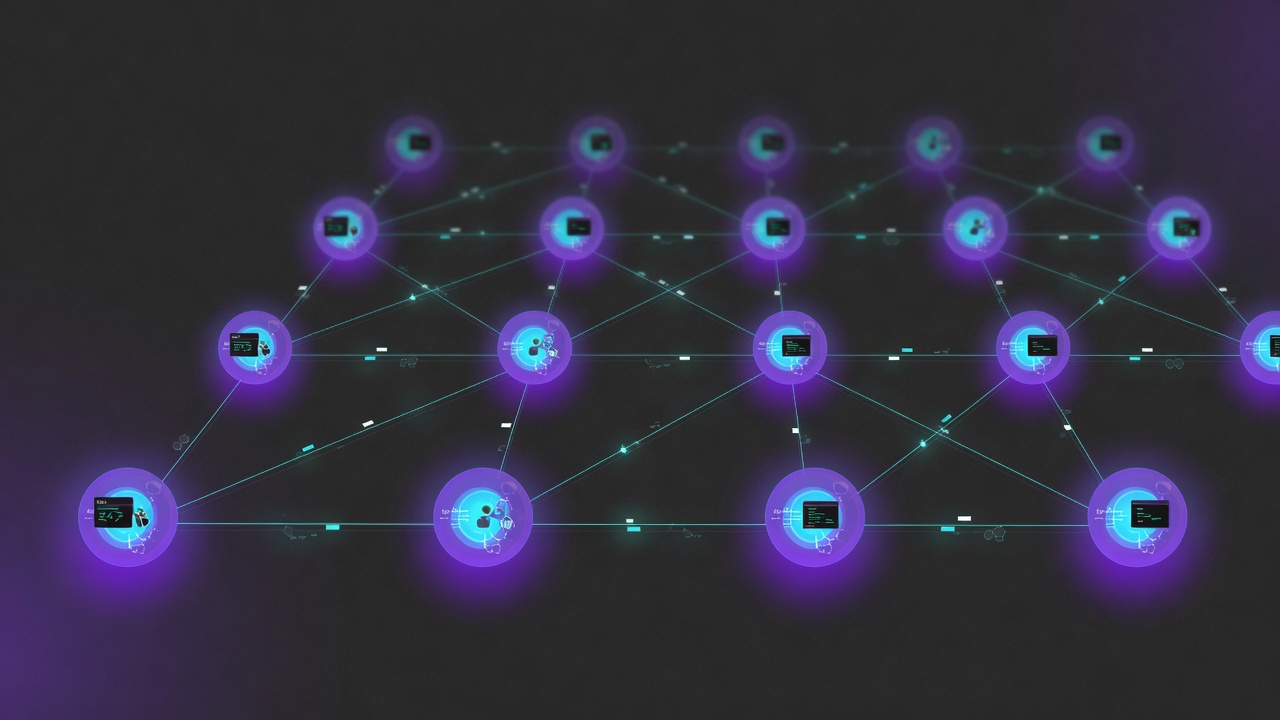
What separates 2026 from 2024 is the fleet layer on top of that: orchestrating multiple agents in parallel rather than waiting for one to finish before starting the next. It's the difference between one worker fixing bugs serially and a team of workers fixing bugs by domain, in parallel, with a coordinator reviewing diffs as they land.
What does an agentic coding workflow actually look like?
A typical agentic workflow in 2026 starts with a parent agent that reads the codebase, decomposes the task into subtasks, and delegates each to a specialist sub-agent via a tool call. The parent waits for results, reviews diffs, and either commits or re-dispatches. The sub-agents do the actual editing.
Here is a concrete pattern that appears regularly in real-world Claude Code sessions:
| Layer | Role | Tool calls involved |
|---|---|---|
| Orchestrator | Reads project state, decomposes into subtasks | Read, Bash, TodoWrite, Task |
| Domain agent | Works one bounded area (auth, API, tests) | Read, Edit, Write, Bash |
| Review agent | Audits the domain agent's changes | Read, Bash |
| Commit agent | Stages, writes message, commits | Bash |
This is where the economics start diverging from expectations. Each sub-agent spawned in parallel is a separate API conversation, with its own context window, its own system prompt loading overhead, and its own token consumption against the same account's per-minute and per-session budgets. A six-agent fan-out against a single account doesn't multiply your throughput by six — it multiplies your rate-limit exposure by six.
Power Claude's Balanced Mode is designed specifically for this pattern — it routes each sub-agent's requests across your Claude.ai account pool so no single account bears the entire fleet's token load. Start the 14-day Premium Trial for $0 today if you're already running multi-agent sessions.
Orchestration frameworks vs native tool-calling — do you need both?
The 2026 AI-coding landscape has two approaches to agentic orchestration, and developers regularly confuse what each one does.
Native tool-calling is the mechanism the model uses to invoke tools the host application provides: read a file, write a shell command, search the web. Claude Code, Copilot agent mode, Cursor — all of them expose a tool surface to the model and let it decide when to call each tool. The orchestration happens inside the model's context; no external framework is needed.
External orchestration frameworks — LangGraph, CrewAI, AutoGen, and similar — sit outside the model and coordinate multiple model calls, managing state machines, memory, and agent-to-agent messaging explicitly in code. As Danish Ashko's 2026 LLM survey observes, most developers working on real coding tasks find that native tool-calling is sufficient for the majority of agentic coding work — the framework layer becomes necessary only when you need explicit inter-agent communication, persistent external memory, or coordination patterns the host IDE doesn't natively support.
The practical question is not "framework vs native" but "when does my task outgrow native?" The answer for coding specifically:
| Pattern | Native tool-calling is sufficient | External framework adds value |
|---|---|---|
| Sequential multi-step edits | Yes | No |
| Parallel sub-task fan-out (same tool) | Yes, via Task / new_task | Only if state machine is complex |
| Cross-repo coordination | Partly — multiple sessions needed | Yes — explicit state needed |
| Long-horizon work with memory | No — context compacts | Yes — persistent external memory |
| Multi-model routing (GPT + Claude) | No | Yes — needed to switch backends |
As the Hacker News thread on agent orchestration documents, teams that reach for frameworks early often find they've added complexity before hitting the actual limits of native tool-calling. Start native; add a framework when you identify the specific coordination gap it solves.
What is the real reliability and cost tax of running agent fleets?
This is where the editorial consensus and the Reddit war stories agree: the biggest operational cost of agent fleets in 2026 is not the token price — it is the rate-limit collisions and lost sessions that occur when you concentrate concurrent load against a single account.
Rate limits multiply with every agent you add
Anthropic enforces two ceilings per account simultaneously: TPM (tokens per minute) and a rolling 5-hour window. A single Pro account running one Claude Code session hits the 5-hour wall at a certain pace. Six sub-agents running concurrently against the same account hit it six times faster — and they trip the per-minute TPM ceiling long before the 5-hour wall becomes visible.
The mirin.pro telemetry analysis found that a large share of Claude Code API calls (about 36% of subagent-class traffic in that write-up) ran on Haiku even when settings named Sonnet/Opus — often via built-in Explore routing, not only “pressure downgrades.” The agents were still running. Much of the exploration work operators attribute to their chosen model was on the smallest model, with incomplete /stats visibility. See our guide: subagent Haiku telemetry + Power Claude visibility.
For GPT-based workflows (OpenAI Codex, o3), the ceiling arithmetic is different but the structural problem is the same: per-minute and per-day token budgets are per-API-key, and heavy parallel agent use saturates them quickly.
Lost sessions are a different kind of cost
A session that dies mid-task doesn't just lose tokens — it loses context. The partially applied refactor, the half-fixed test, the TODO: fix this next the agent was about to execute. If the session doesn't have external recovery machinery, that context is gone. The developer reconstructs from memory or from a diff, which costs far more than the original token spend would have.
The dev.to "Claude Code Lost My 4-Hour Session" thread is the canonical account of this failure mode. The comments on it describe the same pattern across a dozen different projects: sessions end with pending todos, the developer doesn't notice until the next morning, and the work has to be reconstructed. At fleet scale — multiple concurrent agents, each with its own session state — the probability that at least one session fails before the orchestrator collects its result approaches certainty on long runs.
Runaway spend is a fleet-specific hazard
A single interactive Claude Code session has a natural brake: you see the output and decide what to do next. An agent fleet running autonomously overnight does not. The orchestrator dispatches sub-agents, the sub-agents dispatch more work, and the token meter runs until the session hits a limit or the work completes. The $80 overnight-script bill on dev.to and the $47k invoice horror story both follow the same shape: no human in the loop, no hard-cap alert, no budget telemetry.
How do you run agent fleets sustainably?
The structural fixes follow from the failure modes above. They are not exotic — they are the engineering discipline that anyone running a distributed system applies when the system is distributed enough to need it.
Account pooling (rate-limit headroom)
Route each sub-agent's API traffic to a separate Claude.ai account rather than running all agents through one. The accounts you already own (personal Pro, work Pro or Max, experiment accounts) are idle while your primary account is saturated. Pooling activates that idle capacity structurally: each account sees a fraction of the fleet's total load, and no single account's per-minute or 5-hour bucket becomes the fleet's bottleneck.
A naive pool router that reacts to 429s after they happen can still ping-pong between two near-saturated accounts. A budget-aware router projects each account's next-minute consumption before placing a request and avoids accounts whose budget is already committed — routing to the account with the most headroom, queuing behind the account that will recover soonest. The difference in practice is whether your fleet degrades gracefully under heavy load or thrashes in retry loops that stall the orchestrator.
Cost telemetry (runaway spend detection)
Per-session, per-account, per-model cost tracking lets you see where token spend is going before it becomes a bill. The key telemetry to capture:
- Token spend per agent session (not just per project)
- Which model answered each turn (silent Haiku substitutions are invisible without this)
- Cache read vs cache miss ratio (cache reads still count against TPM; the ratio tells you how much of your load is redundant context)
- Projected 5-hour window utilization per account
Most IDEs and AI coding tools don't surface this by default. You either build it into your orchestrator or you read it from the billing dashboard after the fact, which is the scenario the $47k story illustrates.
Session recovery (lost context prevention)
Agentic sessions need recovery machinery proportional to the cost of losing them. For a 10-minute interactive session, restarting from scratch is annoying. For a 4-hour autonomous agent run, it is expensive. The recovery pattern that works:
- Persistent
TodoWritestate that survives a session crash — the orchestrator can resume from the last committed todo list rather than re-analyzing the codebase from scratch - Heartbeat detection that flags a stalled session before the developer discovers it the next morning
- Tool-truncation detection — some sessions end not because of a rate limit but because the agent called a tool that didn't return, leaving the session stuck in a partial state that looks alive but isn't making progress
When session recovery is in place, a fleet failure becomes a retry, not a loss.
Frequently asked questions
What is the difference between an agentic coding workflow and just using an AI chat assistant?
An AI chat assistant responds to one prompt and waits for the next. An agentic coding workflow gives the model a goal and lets it take multiple actions — reading files, running commands, writing code, spawning sub-agents — without requiring a human prompt between each action. The defining characteristic is that the model operates over multiple steps with tool access, not just one response. In practice, the difference is how long you can walk away and trust the system to make progress without supervision.
Do I need an orchestration framework like LangGraph or AutoGen to run agent fleets in 2026?
Not for most coding tasks. Claude Code's Task primitive, Cline's new_task, Cursor's background agents, and similar IDE-native mechanisms handle fan-out, parallel sub-task execution, and result aggregation without an external framework. Frameworks add value when you need explicit inter-agent state machines, cross-model routing (e.g., mixing Claude and GPT-4o in the same pipeline), or persistent external memory that survives context compaction. Most teams reach for frameworks before they need them — start native, add a framework when you identify the specific gap.
Why do agent fleets hit rate limits so much faster than single-session use?
Each sub-agent in a fleet is a separate API conversation drawing on the same per-account token budgets. A six-agent fan-out consumes tokens at up to six times the rate of a single session, and it concentrates that load in a short window, which trips the per-minute TPM ceiling before the 5-hour rolling window ever becomes visible. The agents also carry full context windows — system prompts, tool descriptions, memory files — which inflate the baseline token cost before the first useful output token is generated. Running a fleet against a single account compounds both effects simultaneously.
How do you prevent runaway token spend in an autonomous agent fleet?
The three controls that work in combination: a hard token-spend cap configured at the API or tool level (most providers support this); live per-session cost telemetry so you see projected spend before the session ends; and a human-in-the-loop checkpoint for long-horizon tasks before the agent commits irreversible actions (large refactors, database migrations, external API calls). Without at least the spend cap, an autonomous overnight agent has no brake. The cap does not need to be tight — it needs to exist.
Is agentic coding in 2026 stable enough for production codebases?
For bounded, well-scoped tasks with clear success criteria — fix these lint violations, write tests for these functions, refactor this module to this interface — yes, agentic coding is stable enough for production today. The failure modes are well-understood: rate-limit saturation on heavy fan-outs, lost sessions on crashes, and silent model downgrades under load. Each has a structural fix. What is not stable is unconstrained autonomy on large codebases without recovery machinery, cost caps, or human review gates on consequential actions. The tools are ready; the operational discipline around them is what most teams are still building out.
References
- The Best LLMs for Agentic Coding in 2026 — Real World, Not Just Benchmarks — Danish Ashko, dev.to
- Are Agent Orchestration Frameworks Still Relevant in 2026? — Ivelin, Substack
- Hacker News discussion: agentic coding and orchestration frameworks
- Claude Code sub-agent Haiku telemetry — mirin.pro
- Subagent Haiku telemetry + Power Claude visibility — this site
- Claude Code Lost My 4-Hour Session — here's the fix — dev.to
- What Happened When I Got a Surprise $80 Claude Bill — dev.to
- Claude Costs: Who Really Pays the AI Bill ($47k invoice) — DeSight Studio
- Multi-account feature request — GitHub Anthropic/claude-code #44687
- Anthropic rate limit documentation
Running an agent fleet is not a reason to downgrade to a less capable model or to tolerate the 5-hour wall eating three hours of your workday. The rate-limit problem is structural — routing concurrent agents through a single account's token budget will always hit the ceiling, no matter how much the model improves. The fix is distributing that load across the accounts you already own.
Balanced Mode in our VS Code extension does that routing automatically — it places each sub-agent's API traffic on the account with the most headroom, with an anti-ping-pong budget-aware router so you don't thrash between two near-saturated accounts. The watchdog layer handles session recovery when an agent stalls; cost analytics surface per-session, per-model, per-account spend before it becomes a month-end surprise.
The 14-day Premium Trial is $0 today — Balanced Mode, session watchdog, and cost analytics all included. Cancel anytime before day 15. Prefer to start without a card? Download Power Claude free: the 7-day free trial includes full Pro access, no credit card required.